Sovereign Shared Workspaces & Governance
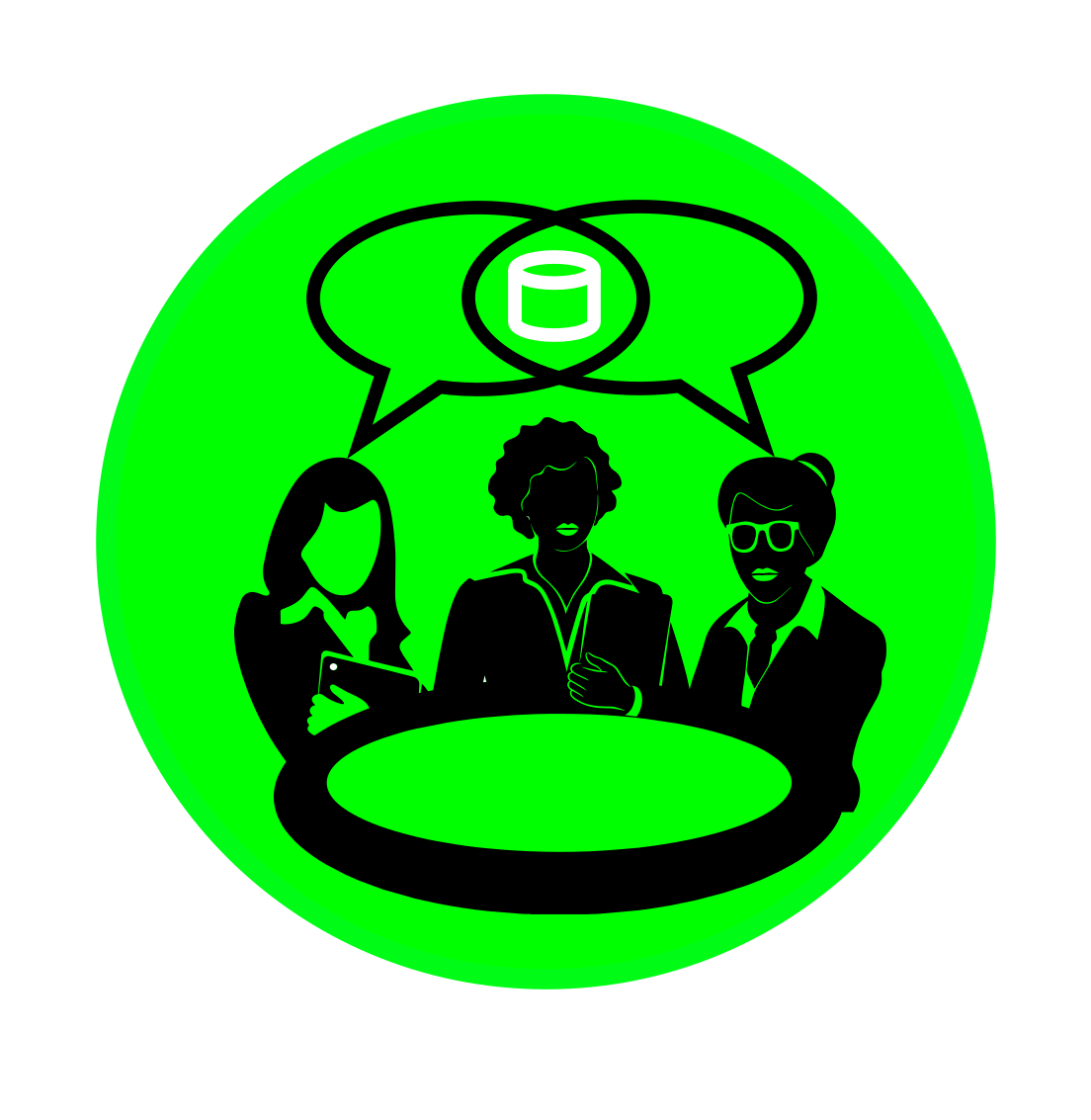
The Collaborator is the shared workspace where two or more organisations do business together without either one taking on the other’s risk. A wealth manager and a client walking through a portfolio. A supplier and a merchant settling contract terms in a secure deal room. Competing banks co-building a shared service without exposing a single customer record to each other. Each workspace is designed to open under a signed rulebook that states who may see what, for how long, and for what purpose – and to close itself when the work is done.
For the person on the other side of the counter, nothing personal changes hands. The oneWallet sovereign digital ID wallet is designed to project a verified fact – over eighteen, resident in this borough, good for this credit limit – without releasing the underlying record behind it. There is no central store of customer detail for anyone to lose. The same single interaction pattern is intended to carry across a phone, a branch counter, a community kiosk and an in-store terminal, so a customer learns it once.
Collaborator Runtime Manifest
Multi-Tenant Workflow Interface
Regulatory Compliance & Shared CapEx
Compliance stops being an annual audit bill and starts being a shared asset. A cohort – typically a bank, a connectivity provider and a retailer – co-funds one set of high-assurance infrastructure instead of each building its own, turning a prohibitive capital project into a predictable shared operating cost. Secure hardware isolation is designed so that each member’s data stays opaque to the others, and to the platform operator, even while a shared model is being trained on it. The compliance frame is UK and EU: GDPR Article 17 right to erasure, DORA operational resilience, PSD3 and FiDA open finance, and eIDAS 2.0 identity.
Deal rooms and contract workspaces are designed to be temporary by construction. When the transaction closes or the signatures are collected, the workspace is destroyed and its keys with it – so the material inside it becomes unreadable rather than merely deleted. This is what makes an erasure request answerable in minutes instead of quarters, and it removes the standing pool of shared customer data that IP and privacy disputes are normally fought over.

eIDAS 2.0 / EUDI Alignment
Every disclosure is tied to a government-recognised digital identity, so a signature is attributable to a real, legally recognised party. High-stakes acts – ratifying a cohort agreement, granting an AI agent spending authority – are designed to require a qualified electronic signature, which moves the burden of proof in a dispute.
Clerk Teleportation Remote Sessions
A qualified bank or council officer can step into a kiosk session from anywhere and help the person standing in front of it – the same officer covering many locations instead of one branch. Every action the officer takes is checked against the rulebook as it happens by the real-time transaction gatekeeper, and written to the tamper-evident record.

BIAN Service Mapping
Ensures integration points align with global banking standards to prevent meaning drift.
Orchestration & Symphony Integration
As a Packaged Business Capability (PBC) of the System of Engagement (SoE), the Collaborator maps external raw payloads into standardised inputs for the KnowledgeHUB Ontology. It coordinates across the Symphony of Systems to execute governed, multi-party interactions:

SoE Normalisation & Payload Ingestion
Normalises heterogeneous inputs (biometrics, touch gestures, API headers) into typed, governable 'Proposed Intent' structures before entering the execution pipeline.
SoA Consent Check & Charter Governance
Verifies user intent against active consent matrices and Ricardian agreements (Cohort Charters) managed by the System of Agreement (SoA).

SoR Bitemporality & Decision Lineage
Committed events carry two independent clocks: when a fact was true, and when the system was told. Reconstructs exactly what the rules were at the moment a decision was executed.

Agreed Rules, Proved Before Launch
Before a cohort's rulebook goes live, the platform checks it against itself and proves the workspace as built matches the agreement as written. Contradictory obligations are caught at design time.
Secure Hardware Isolation & Device Trust
Secure Hardware Isolation & Device Trust
Secure Hardware Isolation & Device Trust Details
Proprietary data-in-use and model configurations are isolated within hardware-encrypted CPU enclaves at the edge. Memory boundaries are attestation-locked using Intel SGX/AMD SEV sidecars. Proposed Intents are parsed in sub-milliseconds through Syntactic checks (delegated On-Behalf-Of tokens), Semantic checks (nomenclature validation), and Pragmatic checks (FinOps budget limits and HBOM attestation).
Pre-Launch Conflict Check & Safe-Path Mapping
Pre-Launch Conflict Check & Safe-Path Mapping
Cohort Charters and Agreement DAG dependencies are checked for consistency using Z3 SMT solvers to yield a Proof of Non-Contradiction (PoNC). The DRAGON Engine traverses a pre-compiled, non-circular Legal-State Reachability Graph (LSRG) in O(1) time complexity, avoiding Gödelian Shadows and resolving conflicts before execution.
Roadmap position: The Collaborator is part of the onePOI.online reference architecture, validated for viability by end of 2028. Tenant cohorts derive a target state from this architecture and transition toward it on their own roadmap; capabilities described here are design targets, not shipped product.
The Non-Negotiable Financial Trust Engine
The overarching framework is the Salient Innovation Set, with the Salient FinTech Innovation Set at its foundational core. Every phygital, civic, healthcare, retail, or agentic interaction ultimately resolves into a lawful value exchange, identity binding, cryptographic settlement, or fiduciary obligation. The FinTech innovation set provides the non-negotiable trust engine that makes the entire sovereign ecosystem viable for all incoming Tenant Cohorts.
BIAN v14.0 Substrate Alignment
Collaborator coordinates multi-party approvals, binding signatory mandates and delegated authorities directly to BIAN Party Authentication and Position Keeping Service Domains.
Real-Time A2A Rails & Settlement
Enables dual-custody authorisation for high-value Account-to-Account payment rails (SEPA Instant, Faster Payments, FedNow), ensuring multi-agent transactions require cryptographically unforgeable human-in-the-loop quorums.
Token Gantry Value Custody
Interacts with the Token Gantry to securely release conditional payments, escrow distributions, and value tokens only when all collaborative policy thresholds are satisfied inside hardware TEE enclaves.