Software Moves Fast. Law Moves Slow. The Gap Is Where Enterprise Risk Lives.
Modern enterprise architecture is breaking under the weight of its own complexity. As organisations deploy high-velocity microservices, agentic AI workflows, and multi-jurisdictional data meshes, the traditional approach to compliance, security, and governance has reached a dead end.
For decades, enterprises relied on Retrospective Auditing: running systems continuously and inspecting logs after the fact to catch violations, unauthorised transactions, or security breaches. When systems moved at human speed, this was acceptable. At wire-speed – where autonomous agents and automated pipelines execute millions of state transitions per second – retrospective auditing is merely a post-incident autopsy.
Downstream Enforcement Trap
Legacy systems embedded policy logic into application code, database triggers, or API gateways. This introduced catastrophic "policy drift," logic fragmentation, and subtle edge-case vulnerabilities where unvalidated states bypassed security checks entirely.
 The DRAGON Solution
Positioned firmly within the System of Agreement (SoA) Layer, the DRAGON Engine transforms policy into immutable digital physics. Non-compliant states and unauthorised intents do not fail in production – they are rendered mathematically impossible to execute.
Engineered for Institutional Margins.
Adopted for Human Sovereignty.
Every capability across the Salient Innovation Set delivers an immediate, symmetrical return: radical margin recovery for the enterprise tenant, paired with frictionless dignity and absolute cryptographic safety for the citizen.
How the Tenant Expands Margins
Transforming operating models from defensive cost centres into agile, shared revenue engines through multi-tenant pooling and mathematical compliance.
-

CapEx Pooling & No Single-Tenant Hardware
POI Appliances run white-label on co-funded premises. Reach 50 commercial catchments without funding 50 proprietary branch builds.
-

Zero Interchange & Flat-Fee Clearing
Instant Account-to-Account rails (SEPA Instant / PayShap) bypass 1.5–3.5% card scheme tolls with predictable, flat sub-cent clearing fees.
-

Compliance by Construction
Agreement DAGs enforce statutory mandates at wire speed; non-compliant states cannot execute, eliminating retrospective audit penalties.
-
Accelerated Partner Onboarding
Pre-verified BIAN and ArchiMate capability components compress multi-firm integration cycles from quarters to days.
Why the Customer Loves Using It
Delivering sovereign dignity and verifiable security where users never surrender control over their identity, consent, or funds.
-

Nothing Stored to Steal
Credentials remain in the user's oneWallet. A breach of a merchant's server reveals zero identity records, protecting citizens completely.
-

One Pattern, Everywhere
The same intuitive tap-and-confirm interaction works seamlessly at a high-street kiosk, transit hub, EV charger, or smartphone.
-

Delegated Authority, Never Escalated
Autonomous AI agents carry single-use, bounded warrants; an agent checking information cannot escalate its authority to transfer money.
-

Payments That Do Not Fail
When a payment network degrades, the transaction reroutes with authentication preserved – zero declines, zero repeated entries.

DRAGON Runtime Manifest
Triadic Adjudication Hardware
The Quiet Collapse of Probabilistic Governance
As enterprise cohorts integrate autonomous AI workflows, they encounter the Prompt Regression & Policy Drift Paradox.
 TRADITIONAL PROBABILISTIC EXECUTION
 [ Natural Language / Intent ]
 │
 ▼
 [ Stochastic Prompt / Code ] ──► ( Fails Quietly in Production )
 │
 ▼
 [ Unvalidated State Change ] ──► ( Retrospective Audit Catch )
Prompts Are Not Contracts
Relying on natural language prompts or probabilistic LLM guards creates a false sense of security. Fixing an edge case in a prompt frequently triggers silent regressions across unrelated execution paths.
The False Improvement Trap
Aggregate system target performance metrics may improve while silently dropping a critical safety, regulatory, or cross-border compliance invariant down to zero.
Substantiated Integrity
Traditional systems assume application code is compliant until proven otherwise. In regulated environments, this represents an unquantifiable balance sheet liability.
Deterministic Adjudication in Under 100 Microseconds
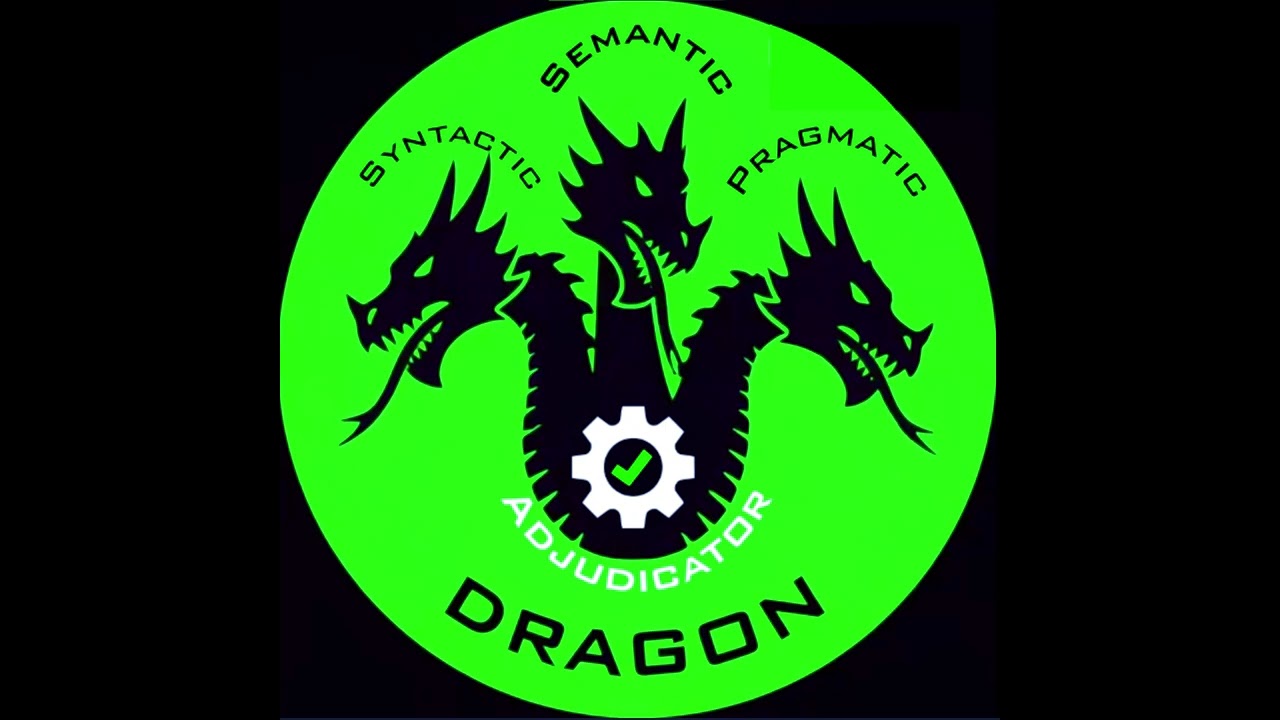
Operating as an inline, non-blocking filter within the System of Agreement layer, DRAGON evaluates proposed intents across a Triadic Reasoning Pipeline before execution.
 [ Inbound Proposed Intent payload ]
 │
 ▼
 ┌─────────────────────────────────────────────────────┐
 │ Layer 1: Syntactic Pass │
 │ Checks: Structural integrity, signatures, HBOM hash │
 └──────────────────────────┬──────────────────────────┘
 │ (Passed)
 ▼
 ┌─────────────────────────────────────────────────────┐
 │ Layer 2: Semantic Pass │
 │ Checks: BIAN grounding, ontology type matching │
 └──────────────────────────┬──────────────────────────┘
 │ (Passed)
 ▼
 ┌─────────────────────────────────────────────────────┐
 │ Layer 3: Pragmatic Pass │
 │ Checks: Deontic rules lattice (F ≻ O ≻ P) │
 └──────────────────────────┬──────────────────────────┘
 │
 ┌──────────────┴──────────────┐
 ▼ (Prohibition F Matched) ▼ (All Conditions Satisfied)
 [ HARD STRUCTURAL VETO ] [ MINT LAWFUL WARRANT ]
 - Drops traffic via eBPF - Authorises Actuator DAG
 - Commits MVEB to ledger - Commits transaction state
Layer 1: Syntactic Pass ($\diamondsuit$)
Topographic ShieldVerifies structural wire-format correctness, schema integrity, and cryptographic signatures against the pre-compiled Legal-State Reachability Graph (LSRG). Enforces strict DAG topologies and verifies device attestation hashes against the hardware HBOM.
Layer 2: Semantic Pass
Guardian of TruthValidates entity meaning and action assertions against canonical BIAN ontologies and the Party Knowledge Graph (PKG). Performs a Proof of Non-Contradiction (PoNC) using formal SMT solvers over KnowledgeHUB TBox schemas.
Layer 3: Pragmatic Pass
Guardian of Purpose
Evaluates the proposed action within its active operational context using deontic logic and applies the Canonical Dominance Order (CDO):
\(\text{Prohibition } (F) \succ \text{Obligation } (O) \succ \text{Permission } (P)\). If an action trips a Prohibition (\(F\)), DRAGON issues an instantaneous Structural Veto.
eBPF-Driven Wire-Speed Structural Veto Enforcement
When the DRAGON engine evaluates a transaction payload against the governing Agreement DAG during its Pragmatic Pass, it resolves the Canonical Dominance Order (\(F \succ O \succ P\)). If a Prohibition condition (\(F\)) evaluates to true, the resulting Structural Veto is pushed to the networking layer at wire speed:
The platform executes this by writing the exact Policy Hash and Veto conditions into kernel-level eBPF map spaces running on SmartNIC Data Processing Units (DPUs). When a non-compliant transaction attempt or queries exceeding FinOps cost thresholds (\(F_{\text{Cost}}\)) are detected, the eBPF filter short-circuits the communication context within the network controller's buffer. The packet is dropped immediately before CPU cycles are spent processing non-compliant workloads.
Shifting Computation from Real-Time Reasoning to Wire-Speed Traversal
DRAGON achieves sub-100-microsecond adjudication without bottlenecking enterprise throughput by completely decoupling Design-Time Verification from Runtime Execution.
┌────────────────────────────────────────────────────────────────────────┐
│ DESIGN-TIME (oneCDE.online & Formal Verification Engine) │
│ - High-dimensional Description Logic written in Composer IDE. │
│ - SMT Solvers prove Non-Contradiction and verify Bisimulation. │
│ - Compiled & pre-pruned into a sparse Legal-State Reachability Graph. │
│ - Minted into an immutable, version-pinned Policy Hash (%PHR). │
└────────────────────────────────────────────────────────────────────────┘
 │
 ▼ (Atomic Swap Protocol)
┌────────────────────────────────────────────────────────────────────────┐
│ RUNTIME EXECUTION (DRAGON Virtual Engine & SISA Firmware) │
│ - Operates via constant-time O(1) matrix-vector operations. │
│ - Microsecond-scale register manipulations (%PHR, %STR, %DBR). │
│ - Issues signed Lawful Warrant Enclosures at wire-speed. │
└────────────────────────────────────────────────────────────────────────┘
1. Design-Time Shift
High-dimensional logical reasoning and SMT solving are handled upstream in oneCDE.online. The Policy Integration Engine (PIME) prunes the logic space into a sparse LSRG matrix.

2. SISA Instruction Set
At runtime, policies execute as microsecond-scale register operations (`%PHR` Policy Hash Register, `%STR` State Transition Register, `%DBR` Deontic Bound Register).

3. Atomic Swap Protocol
Schema updates push across distributed edge points using lock-free memory pointer swaps in a single clock cycle without packet drops or execution jitter.
Integration Architecture Across the Symphony
The DRAGON Engine operates within an end-to-end enterprise platform ecosystem designed for complete lifecycle governance:
 [ DESIGN & GOVERNANCE ]
 oneCDE.online ──► Composer ──► Registrar ──► KnowledgeHUB
 │
 (Evaluated by DRAGON)
 │
 [ RUNTIME ORCHESTRATION ] ▼
 AxiomMESH <──► inConcert iPaaS <──► Conductor <──► [DRAGON ENGINE] ──► TopHAT UI
 │
 ┌──────────┴──────────┐
 ▼ ▼
 [Agreement DAG] [Actuator DAG]
oneCDE.online
Authoritative DesignOps environment where security architects and ontologists author deterministic policy models.
inConcert iPaaS
Ingests legacy external payloads (ISO 20022, JSON-LD) and normalises them into Proposed Intent schemas.

KnowledgeHUB & Registrar
KnowledgeHUB houses TBox schemas while the Registrar mints and signs immutable Policy Hashes ($ ext{PH}$).
Conductor & Actuator DAGs
Reads cryptographically signed Lawful Warrants and branches execution instantly without re-evaluating description logic.

TopHAT Triage Workspace
Human-in-the-loop workspace isolating policy gaps in sandboxes for risk engineers to triage and ratify rules.

Lawful Act Hyperedges
Mints non-repudiable LAHE traces on the bitemporal ledger, serving as proof that the organisation exercised duty of care.
Constitutional Governance & High-Assurance Invariants
Elevating standard compliance into a regulator-grade, machine-executable Constitutional Anchor.
 Principle of Non-Authority (AI Subordination)
Enforces a strict Separation of Powers. The System of Intelligence (SoI) handles probabilistic intent generation ("The Mind") but possesses zero execution authority. Execution authority is structurally hobbled outside the agent within a deterministic, fail-closed environment ("The Hand") governed by the DRAGON Adjudicator.
 Hardware Root-of-Trust TEE Isolation
Multi-tenant enforcement is hard-coded at the hardware layer using Trusted Execution Environments (TEEs) and eBPF/SmartNIC network gates. Physical isolation guarantees tenant-to-tenant side-channel attacks are impossible even under a complete Host OS compromise.
 Cross-Border Corridor Arbitrage
Synthesises multi-jurisdictional compliance criteria (DORA, eIDAS 2.0, EUDI Wallets) using Composite Law with attenuation guarantees. A cross-border transaction naturally compiles the constraints of all involved territories under a strict stricter-constraint-wins invariant.
 Computable Evidence Envelope
Replaces manual log auditing with computable, functional trust primitives. The Evidence Envelope is an atomic cryptographic artifact binding Policy Hash, Dominant Rule ID, and Verdict to the executed action for continuous regulatory supervision.
Summary Matrix: Standard Systems vs. Constitutional OS
| Dimension | Legacy Distributed Systems | Constitutional OS (DRAGON Engine) |
|---|---|---|
| Governance Model | Retrospective Auditing (Post-hoc log reviews) | Proactive Determinism (Fail-Closed at Kernel Edge) |
| Policy Enforcement | Downstream application code / API gateways | Upstream System of Agreement (SoA) Layer |
| Logic Foundation | Stochastic Prompts & Application Rules | Formal Description Logic & SMT Invariants |
| Compliance Verification | Manual sample reviews & log parsing | Audit-as-a-Query via Cryptographic MVEBs |
| Execution Speed | Millisecond to second application evaluation | Sub-45-Microsecond Hardware Traversal |
| System Invariant | "Assumed Compliant Until Caught" | Substantiated Integrity via Lawful Warrants |
Ready to Transform Enterprise Policy into Digital Physics?
Transform your policy landscape from passive text documentation into machine-executable infrastructure.
Formal Logic Proofs & SISA Execution Physics
Mathematical Description Logic proofs, SMT-LIB Z3 solver code, and LSRG topological traversal specifications have been compiled into the Deep Tech Series.
DRAGON Triadic Verification & TCAM Agreement DAG Solvers
DRAGON subjects every proposed intent to a wire-speed Triadic Verification Pass (Syntactic schema integrity, Semantic KnowledgeHUB alignment, Pragmatic deontic logic lattice). It solves Agreement DAG topologies using Ternary Content-Addressable Memory (TCAM) hardware gates, enforcing Canonical Dominance (F ≻ O ≻ P) to issue instant Structural VETOs on non-compliant intentions before host buffer allocation.
DRAGON processes PIME category-theoretic colimits via hardware-level AVX-512 vector bitmasks. If morphism divergence breaches 4.5% or unmapped functors are detected, DRAGON instantly freezes execution into a Minimum Viable Evidence Bundle (MVEB) exception capsule for TopHAT Council arbitration.