The Constitutional Foundry
Multi-Tenant Customer Onboarding & Digital Credential Issuance
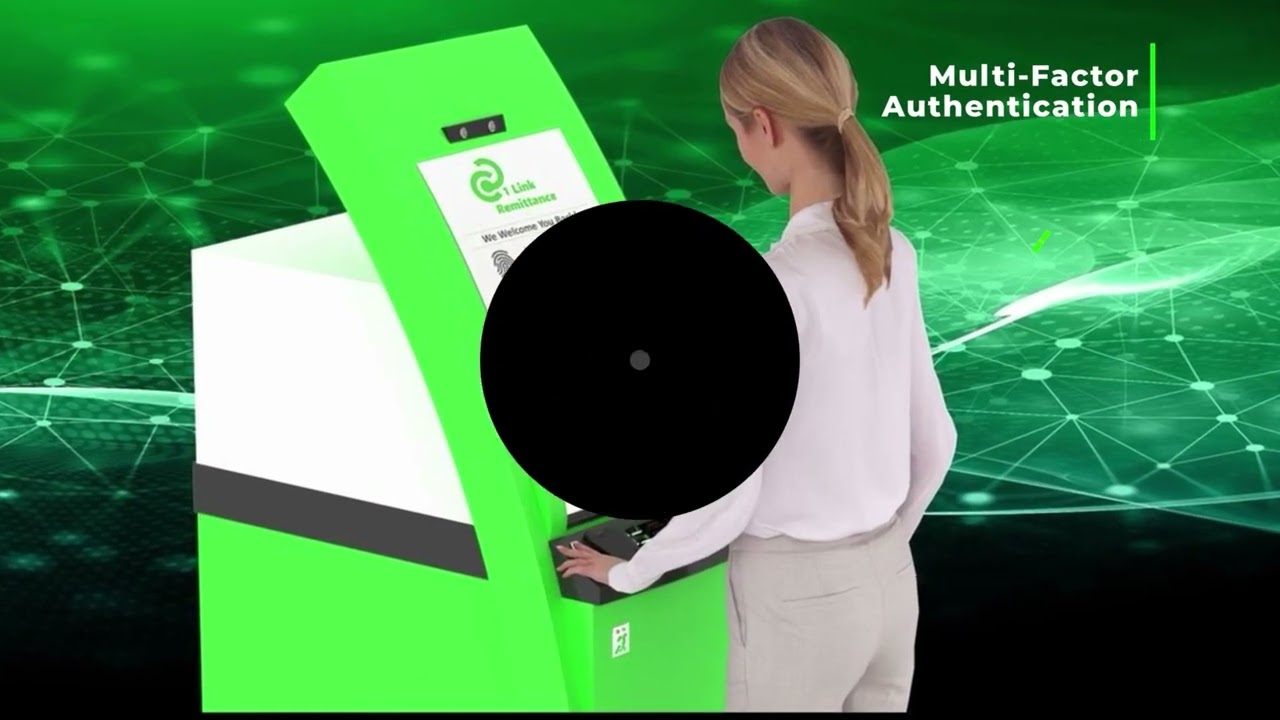
Traditional corporate and institutional onboarding is fraught with weeks of manual KYC reviews, paper-based compliance certifications, and slow credential provisioning. The Constitutional Foundry shifts governance entirely to the left: compiling BIAN service models directly into mathematical Agreement DAGs. As illustrated in this executive walkthrough, incoming institutional tenants and end-customers achieve rapid, federated eKYC/AML attestation, automated risk scoring, and zero-trust domain isolation. Digital payment credentials, cryptographic tokens, and eIDAS 2.0 verifiable credentials are minted and issued dynamically across physical POI appliances and digital oneWallets – eliminating administrative friction while guaranteeing 100% regulatory compliance by design.
Full Stack. Full Cost. Every Time.
Every organisation builds its own compliance infrastructure, security stack, and integration layer independently – paying 100% of the cost to reach a fraction of the addressable market.
Compliance Rebuilt From Scratch. Again.
The same regulatory evidence – DORA, PSD3, AMLD6 – assembled separately by every institution. No shared audit trail. No cumulative Safe Harbor. No pooled advantage.
18 – 36 Months to Launch. Alone.
Bespoke integrations, sequential security reviews, isolated regulatory approvals. By the time a single organisation reaches market, the window has often closed or been claimed by a faster-moving cohort.
What Is a Tenant Cohort?
A Tenant Cohort is a legally and cryptographically bound multi-organisation ecosystem parameterised on the onePOI.online framework. Led by an Anchor organisation – typically a regulated financial institution, national retailer, or public authority – member tenants access shared phygital infrastructure, automated compliance, and autonomous multi-agent coordination under an unalterable Constitutional Operating System.

The Anchor
A regulated institution – bank, regional government body, or retail enterprise – that anchors the cohort. The anchor parameterises the Constitutional Axioms, holds fiduciary custody, and defines cohort operating rules in the System of Agreement.

FinTech Core Engine
The Salient FinTech Innovation Set anchors all cohort transactions in mathematical certainty: BIAN v14.0 bare-metal execution, real-time A2A rails (PayShap / SEPA Instant), Token Gantry identity binding, and bitemporal ledgers.
Member Tenants
FinTechs, independent retailers, 3PL logistics carriers, healthcare clinics, and civic bodies that join the cohort to deliver physical and digital services under the anchor's governance umbrella, retaining 100% data sovereignty.

Pooled Economics
Infrastructure, compliance evidence, and edge hardware CapEx/OpEx are pooled across all members – targeting 60 – 80% cost reductions, eliminating credit card interchange tolls, and sharing recurring micro-commissions.
Engineered for Institutional Margins.
Adopted for Human Sovereignty.
Every capability across the Salient Innovation Set delivers an immediate, symmetrical return: radical margin recovery for the enterprise tenant, paired with frictionless dignity and absolute cryptographic safety for the citizen.
How the Tenant Expands Margins
Transforming operating models from defensive cost centres into agile, shared revenue engines through multi-tenant pooling and mathematical compliance.
-

CapEx Pooling & No Single-Tenant Hardware
POI Appliances run white-label on co-funded premises. Reach 50 commercial catchments without funding 50 proprietary branch builds.
-

Zero Interchange & Flat-Fee Clearing
Instant Account-to-Account rails (SEPA Instant / PayShap) bypass 1.5–3.5% card scheme tolls with predictable, flat sub-cent clearing fees.
-

Compliance by Construction
Agreement DAGs enforce statutory mandates at wire speed; non-compliant states cannot execute, eliminating retrospective audit penalties.
-
Accelerated Partner Onboarding
Pre-verified BIAN and ArchiMate capability components compress multi-firm integration cycles from quarters to days.
Why the Customer Loves Using It
Delivering sovereign dignity and verifiable security where users never surrender control over their identity, consent, or funds.
-

Nothing Stored to Steal
Credentials remain in the user's oneWallet. A breach of a merchant's server reveals zero identity records, protecting citizens completely.
-

One Pattern, Everywhere
The same intuitive tap-and-confirm interaction works seamlessly at a high-street kiosk, transit hub, EV charger, or smartphone.
-

Delegated Authority, Never Escalated
Autonomous AI agents carry single-use, bounded warrants; an agent checking information cannot escalate its authority to transfer money.
-

Payments That Do Not Fail
When a payment network degrades, the transaction reroutes with authentication preserved – zero declines, zero repeated entries.
The 4-Tier Maturity Framework
Physical touchpoints and autonomous multi-agent meshes cannot be deployed in isolation. Grounded in the STRM crosswalk architecture, founding cohorts advance through four structured maturity tiers from local co-creation to sovereign critical infrastructure.
Genesis Anchor
Pre-launch charter formulation. Activating the L1/L2 Axiom MESH, co-ratifying the ecosystem licence, and bootstrapping the bitemporal Hypergraph Ledger before hardware deployment.

Commercial Bilateral
Deploying BIAN v14.0 Packaged Business Capabilities (PBCs) and bilateral Agreement DAGs. Real-time account-to-account settlement (PayShap / SEPA Instant) bypassing card interchange rails.

Multi-Tenant Mesh
Pooling physical POI Appliances, LockerSHOP 3PL hubs, and Merchant +ONE retail membranes across competing brands with mathematical zero-knowledge isolation and shared micro-commissions.
Sovereign Infrastructure
Full jurisdictional autonomy under the Constitutional OS. Continuous hardware attestation via oneCERT, eBPF in-kernel membranes, and Ricardian treaty federation across global borders.
Founding Tenant Risk & Reward
The initial cohorts that fund the platform substrate take the earliest risks. To reward this commitment, Founding Tenants receive exclusive territorial rights in their region, permanent seats on the TopHAT governance council, and micro-cent API transaction rebates as the local ecosystem scales.

The Defensive Patent Shield
Putting the Phygital Fabric to the Test
Explore how our human narratives interconnect on the shared onePOI.online platform. These stories prove that pooled infrastructure is not just a technical theory, but a live, responsive experience for citizens and enterprises.
Alex's Journey
From a physical high-assurance biometric login at a CivicHUB Switcher+ kiosk to programming bounded AI agents that construct multi-ledger atomic payments.

Betty's Story
A self-employed construction contractor locks in transparent consent at a kiosk, obtains smart SME credit via real-time trade data, and triggers zero-touch backup terminal deployment when her device is stolen.

Patient Journey
Emergency clinical intake bypasses latency via local Centrifugal Rule Caching in the Alps, while amnesiac TEE enclaves shred vitals from memory after inference, exporting only non-PII diagnostic confidence traces.

The Auditor's SOP
Regulators audit an automatically denied loan in minutes by querying the immutable SoR, visualizing the DAG-of-thought in the Bitemporal Graph, and unpacking the converging colimit node to verify math proofs.
The CivicHUB – Three Organisations. One Rural Town.
Three organisations that could not justify standalone infrastructure in a rural community deploy together on shared constitutional infrastructure – achieving 100% local service availability at a fraction of the cost of individual branches or service centres. In this model, co-located tenant domains are completely isolated in hardware-encrypted TEE Hardware-Isolated Enclaves at the edge, ensuring zero memory leakage between the bank, the municipality, and the telco. Under network outages, the appliance switches to Autonomous Edge Resilience, executing local transactions using verified Isomorphic Stanzas and Threshold Cryptography (MPC) to assemble key fragments in-memory only when needed, making the physical hardware tamper-proof.
National Bank – Tier 2 FSI
Seeking to reduce branch OpEx while maintaining physical presence. Holds the regulatory licence, defines the Constitutional Axioms, and contributes banking and payments infrastructure to the cohort.
Telecommunications Provider
Contributes 5G/Wi-Fi hotspots via the POI Appliance, providing broadband connectivity to underserved communities while earning a service commission on every connected interaction.
Municipal Government
Delivers civic identity verification, tax services, and benefit payments through the shared appliance – eliminating the need for a separate government service centre.
The Multi-Tenant Cohort Walkthrough
Architecting White-Label BaaS for Retailers via the onePOI.online CDE
Executive Summary: The Cohort Imperative
In the modern phygital economy, high-volume Merchant Retailers are aggressively seeking to embed financial services into their customer journeys. They demand white-label “Super-App” capabilities and intelligent Point-of-Interaction (POI) physical appliances at their checkouts to unlock new revenue streams, drive loyalty, and offer instant credit. If their traditional Financial Services Institution (FSI) cannot provide these highly composable, agile services, merchants will switch to disruptive tech-first competitors.
To capture and retain this market, FSIs must pivot from monolithic service providers to Governing Anchors of a Tenant Cohort.
This document provides a walkthrough of a Multi-Tenant Cohort – consisting of a Tier-2 FSI (the Anchor), an Electronic Money Institution (EMI), and a Money Services Business (MSB) – partnering to build a white-label BaaS product for a major Merchant Retailer. We will trace this journey through the Salient Innovation Set’s two core collaborative engines: the Ideator Academy (DesignOps and Strategy) and Launch Works (DevSecOps and Execution), operating entirely within the onePOI.online Cloud Development Environment (CDE).

The Ideator Academy: Design Thinking & The STRM Crosswalk
The Ideator Academy is the structured, strategic environment where the Tenant Cohort initiates the Product Development Lifecycle (PDLC). Here, pooled platform resources (people, facilities, and technology) converge in the CDE’s collaborative workspaces. This is a radical departure from traditional siloed development.
The Cast & The Upfront Alignment
Instead of sequential handoffs, the leaders of the four primary operational domains co-create the product simultaneously:
Driven by top-line growth, conversion rates (CVR), and high-velocity Merchant acquisition.
TopHAT legal and compliance experts ensuring rigorous alignment with AMLD6, PSD3, and GDPR.
Focussed on unit economics, margin viability, fee cascades, and cloud/edge compute cost optimisation.
Focussed on Total Experience Management (TXM) across the physical kiosk and digital wallet.
 The STRM Crosswalk in Action
The cohort enters the CDE Composer to design the “Merchant Community Hub.” They perform a real-time STRM (Security, Trust, and Risk Management) Crosswalk:
RevOps proposes a seamless feature: “A customer scans a QR code at the physical POI Appliance, instantly receives a micro-loan underwritten by the FSI, and the EMI executes a cross-border FX payment for the imported goods in the cart.”
“For optimal TXM, this entire phygital handshake – from scan to loan approval to payment – must execute in under 1.5 seconds target latency budget to prevent checkout line abandonment.”
Traditionally, compliance would flag this weeks later. Here, RegOps, utilising the CDE’s Axiom MESH, instantly responds: “Instant, cross-border micro-loans trigger Enhanced Customer Due Diligence (eCDD). We cannot use manual review. We must author a new Agreement DAG that leverages the user’s eIDAS 2.0 verifiable credential for automated algorithmic solvency checks.”
“Executing three external API calls (Identity, Credit Check, FX Routing) per transaction destroys the Merchant’s margin on baskets under €50.”
Lean Startup & Business Model Canvas Augmentation
The cohort translates these crosswalk insights into a living, executable Business Model Canvas within the CDE.
In the onePOI.online ecosystem, the canvas is not a static document. It is parameterised directly into a foundational Agreement DAG (Directed Acyclic Graph):
Guaranteed sub-second solvency validation and instantaneous settlement right at the physical retail checkout appliance.
FinOps hardcodes automated distribution: FSI receives 1.2%, EMI receives 0.4%, and Merchant retains 98.4% of total transaction value.
The hardware specifications (HBOM) of the POI Appliance are mapped directly to the software requirements (SBOM) via the Registrar.
The “Pivot or Persevere” Mechanism (Digital Twin Simulation)
Before a single line of production code is compiled, the cohort utilises the CDE’s System of Intelligence (SoI) Simulation Studio. They subject their draft Agreement DAG to a simulated, high-volume Black Friday event.
The simulation reveals that relying on the MSB’s external API for real-time FX settlement introduces a 2.8-second latency delay.
This violates the ServiceOps TXM constraint (1.5s max target) and triggers a timeout error in the RegOps eCDD flow.
Guided by RevOps, the cohort pivots immediately. They alter the Agreement DAG to utilise the FSI’s System of Record (SoR) Data Mesh. They create a “Deferred Settlement” rule: for baskets under €50, the transaction is authorised instantly against a local, cryptographic edge-ledger on the POI Appliance, and the MSB settles the FX in batch overnight.
The simulation is re-run. Execution latency drops to a target 300 milliseconds. Margins increase. The DRAGON engine formally proves the logic is legally compliant. The decision is unequivocally: Persevere.
Launch Works: Transitioning to DevSecOps Cycles
With the business model mathematically validated, the cohort graduates from the Ideator Academy and enters Launch Works – the execution engine where DesignOps transitions seamlessly into DevSecOps.
Constitutional Backlog Grooming
Backlog grooming is no longer about estimating story points for “spaghetti code.” It is the process of assembling pre-certified Feature SBOMs (Software Bills of Materials) into orchestrated workflows.
The CDE’s AI Co-pilot ingests the validated Agreement DAG and automatically generates the required Actuator DAGs (the specific deterministic execution commands dispatched to the Conductor).
If a developer attempts to pull a third-party open-source library for the UI that has a known vulnerability (CVE), the TopHAT security overlay immediately flags the backlog item with a “Red X.” It structurally cannot be sprint-planned until a secure, compliant library is swapped in.
The Execution Cycles (From Vibe-Code to Kernel)
The pooled platform engineers and developers utilise the CDE to compile the final product:
Developers utilise High-Code (Rust/Wasm) for the edge-ledger, and low-code/vibe-code for the Merchant-facing analytics dashboards.
The DRAGON Engine continuously monitors the CI/CD pipeline. It guarantees that the code being compiled perfectly matches the legal and financial rules agreed upon by RevOps, RegOps, and FinOps during the Ideator Academy phase.
To ensure that the Merchant’s customer data is cryptographically isolated from the EMI’s proprietary routing algorithms (even though both run on the same physical POI Appliance), the pipeline automatically pushes Cilium eBPF network policies down to the Linux kernel of the hardware.
Conclusion: Continuous Authority to Operate (cATO)
By the end of the Launch Works sprint, the white-label “Merchant Community Hub” product is ready for deployment to thousands of retail stores.
Because the cohort utilised the onePOI.online CDE, they do not need to pause for a three-month manual security audit or legal review. The RegOps rules, FinOps constraints, and SecOps threat models were fundamentally baked into the architecture from the very first brainstorming session.
The FSI, EMI, and MSB have successfully pooled their resources to deliver a category-defining phygital product at unprecedented speed – transforming governance from a bureaucratic barrier into their ultimate competitive moat.
Sector-by-Sector Value Propositions & Strategic Roadmap
Every Tenant Cohort solves distinct operational bottlenecks and unlocks unique economic gains. Below is the master matrix mapping the core Jobs To Be Done (JTBD), Pains, Gains, Architectural "Hows", and Strategic "Whys" across our key prospective tenant sectors.
Modernisation Without Ledger Rip-and-Replace
Zero-Interchange Phygital Checkout & Instant Liquidity
Sovereign Identity (eIDAS 2.0) & Shared Civic Hubs
Amnesiac Edge Intake & Provable Health Data Sovereignty
Field-to-Shelf Provenance & Trade-Data Credit Singularity
Edge Tower Monetisation & SmartNIC Policy Acceleration
The Q4 2026 / 2027 Cohort Commercialisation Roadmap
Tenant Cohorts are moving through a phased deployment roadmap: Phase 1 (Foundation Sprints & L1/L2 Axiom MESH Activation) → Phase 2 (Consortium Anchors & Regional CivicHUB Deployments) → Phase 3 (Global Multi-Jurisdictional Scale & Full Fleet Commercialisation in Q4 2026 / 2027). Early anchors secure permanent governance seats on TopHAT and territorial first-mover advantage.
Two Cohort Models
Sector-Led Cohort
Homogeneous tenants sharing vertical specialization, enabling the deepest pooling of compliance assets and regulatory history.
Cross-Sector Cohort
Heterogeneous tenants offering horizontal reach across diverse industries, creating the broadest local network effects.
Cohorts are either cross-sector (mixing organisations from different industries) or sector-led (anchored and dominated by one industry vertical). Both models operate on the same platform with the same constitutional guarantees.
Cross-Sector Cohorts
A bank anchors a cohort that includes a retailer, a local authority, and a healthcare provider. Each tenant serves its own customers through a shared phygital infrastructure – dramatically expanding the reach and utility of every member's services.
- Maximum infrastructure utilisation across diverse sectors
- Cross-tenant data exchange governed by Agreement DAGs
- Widest reach for POI Appliance deployment
Sector-Led Cohorts
An anchor organisation leads a cohort of peers from the same sector – for example, a group of regional banks or a consortium of retailers – sharing sector-specific compliance axioms, AI models, and POI infrastructure with deep sector expertise built in.
- Deep sector-specific constitutional governance
- Shared constitutional axiom sets – compliance intelligence authored once, governed for every member
- Faster regulatory approval through shared compliance history
Sector-Led Cohort Types
Each sector has its own cohort model – tailored to its regulatory environment, customer base, and infrastructure needs. All operate on the same Constitutional OS.

FSI Led Cohorts
Banks, credit unions, and payment institutions anchor cohorts enabling Banking-as-a-Service, Agentic Payments, and Digital Identity.

Public Sector Led
Governments and local authorities transforming Digital Public Infrastructure – delivering citizen services, benefits, and digital ID at scale.

Retail & Hospitality Led
Retailers and hospitality operators unifying in-store, online, and mobile into a governed phygital experience with programmable loyalty.

Agriculture & Production
Bringing constitutional-grade digital infrastructure to farming and food supply chains – supporting logistics from Farm to Fork and quality from Soil to Gut.

CSPs & TECH Co.s
CSPs and tech companies providing connectivity, edge compute, and API capabilities that power the phygital ecosystem at scale.
Your Sector
The platform is sector-agnostic. If your industry isn't listed, talk to us about establishing a new cohort.
Get in touch →How the Continuum Maps to Cohorts
Value flows through four stages – Field, Finance, Shelf, Neighbour – and each stage is held by a tenant cohort. The continuum is the flow; the cohort is who anchors it. Together they turn a sequence of sectors into one governed, local economy, with the LockerSHOP and 3PL rail carrying value between them.
Read across, it is a supply chain. Read as cohorts, it is the commercial engine: each anchor underwrites the stage it owns, and the rail carries value between them.
The Economics of Pooling
Why the cohort model delivers results that no organisation can achieve alone.
Submission Tokens & Governance-as-a-Service
A cohort generates a continuous stream of governed acts. Each one mints a Minimum Viable Evidence Bundle (MVEB) at the moment of execution. The Submission Token is how that act is metered into the cohort economy.
One token, one LAHE
A Submission Token is the per-LAHE micro-fee that flows when a tenant executes a governed act. To secure AI agent actions across tenants, each transaction runs inside a Neuro-Symbolic Sandwich, bounding agent execution to a symbolic Action Space. Any violation triggers a kernel-level Structural VETO before the token is spent.
The Anchor's revenue rail
Submission Tokens roll up to the Anchor as Governance-as-a-Service (GaaS) revenue. This continuous auditing framework helps FSIs achieve Basel IV Capital Relief by proving to regulators that operational risks are minimised through compliance-by-construction.
LAHE micro-royalties
Authoring firms earn micro-royalties on every token paid against their contracts. The platform's compliance ledger resolves the conflict between GDPR data erasure and AMLR compliance retention mandates. Personal customer data is removed via PAIF Cryptographic Shredding of the PII decryption keys, while the anonymous compliance hashes remain on-chain.
Find Your Cohort
For as little as €2,500*, a Discovery & Positioning Workshop maps the Salient Innovation Sets relevant to YOUR objectives, domain and sector, resulting in a "high-level" Report and Slide Presentation. This presents a review of strategic opportunities and cohort fit at a Contextual and Conceptual level before committing limited resources and time further.